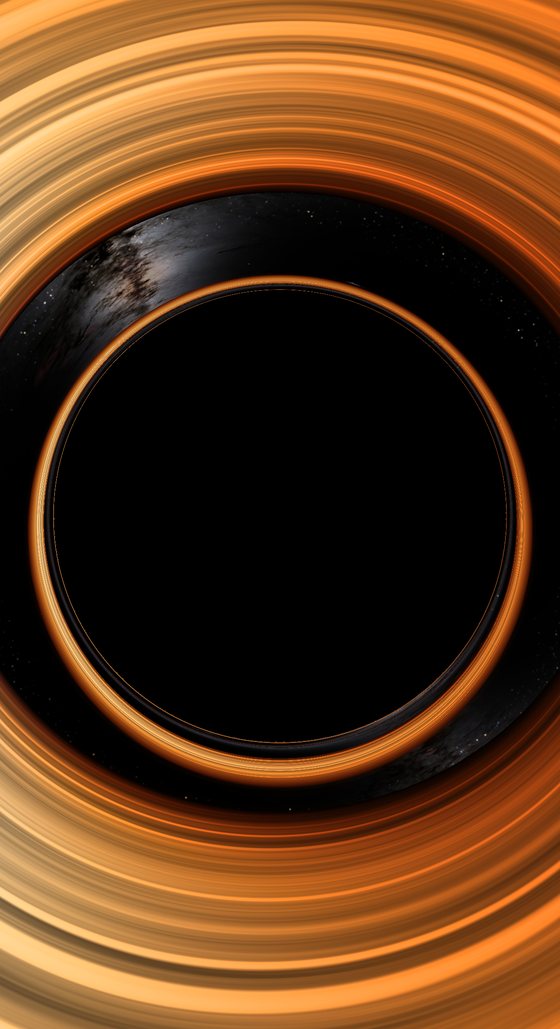
Seven black holes in your sky.
Cygnus X-1 from 10 Schwarzschild radii: the shadow, the hot disc it is feeding on, and the Milky Way behind it bent around the hole. Pull the dial from a thousand radii in to three.
 Stellar Tour
Point your iPhone or iPad at the night sky and get a guided tour of everything up there: two billion real stars, every planet and major moon, eclipses, meteor showers, 13,000 deep-sky objects, and a course in astronomy that starts with the sky over your head and ends at the edge of the universe.
 For iPhone and iPad. Free to start.
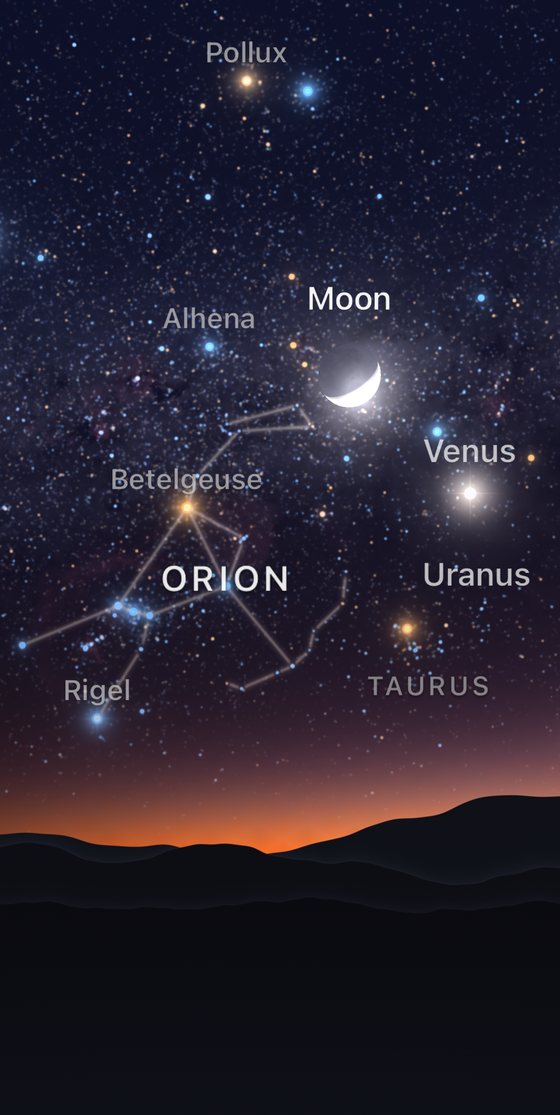
Seven black holes are new in your sky. Fly in toward one and watch the starlight bend into rings around its shadow, while the disc of gas it is feeding on wraps over the top, traced through the same bent light. Around them are 29 of the universe's most extreme objects at their real places, from pulsars and magnetars to quasars and the first gravitational waves, with a new lesson, The extreme universe. And the High-Energy Sky shows the whole sky in gamma rays and X-rays.
Cygnus X-1 from 10 Schwarzschild radii: the shadow, the hot disc it is feeding on, and the Milky Way behind it bent around the hole. Pull the dial from a thousand radii in to three.
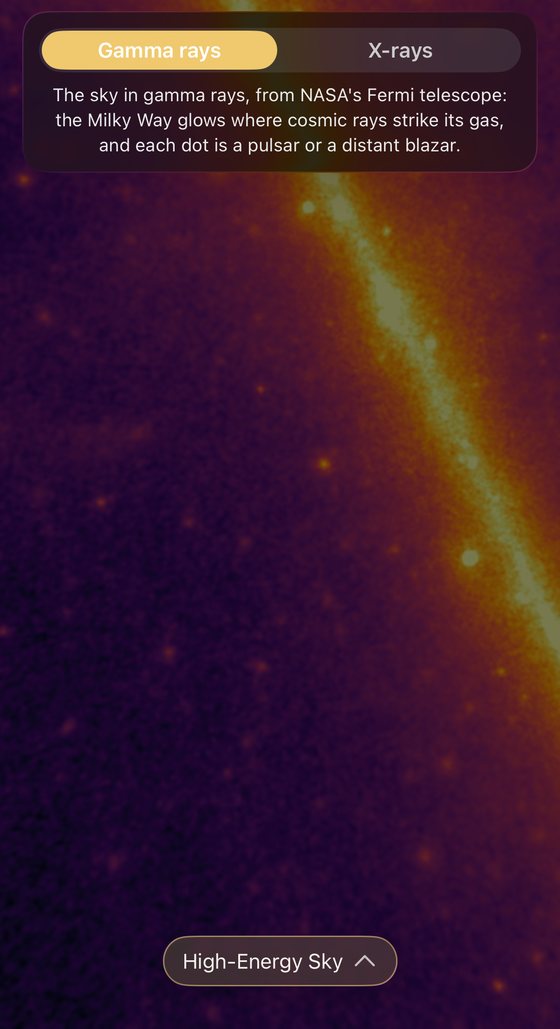
The whole sky in gamma rays from NASA's Fermi telescope, and in X-rays from ROSAT: the Milky Way glows where cosmic rays strike its gas, and each dot is a pulsar or a distant blazar.
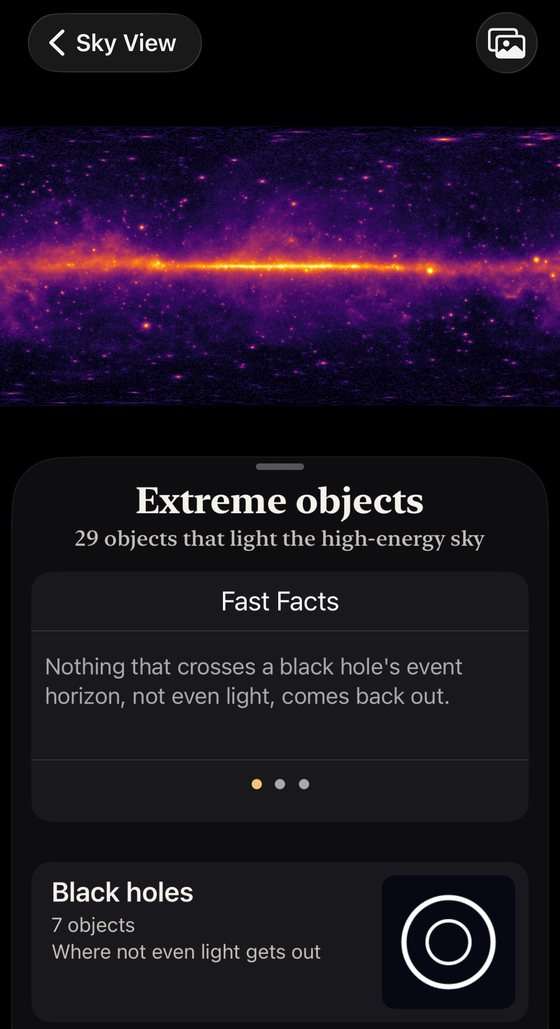
29 objects that light the high-energy sky: black holes, neutron stars, magnetars, X-ray binaries, quasars, gamma-ray bursts, gravitational waves and cosmic rays, each at its place in your sky with its story.
Free: search for any of them, and look at a black hole from far out. Flying closer, the objects' stories, the new lesson and the High-Energy Sky are part of Cosmic Expansion.
Every picture below is the app itself, on an iPhone.
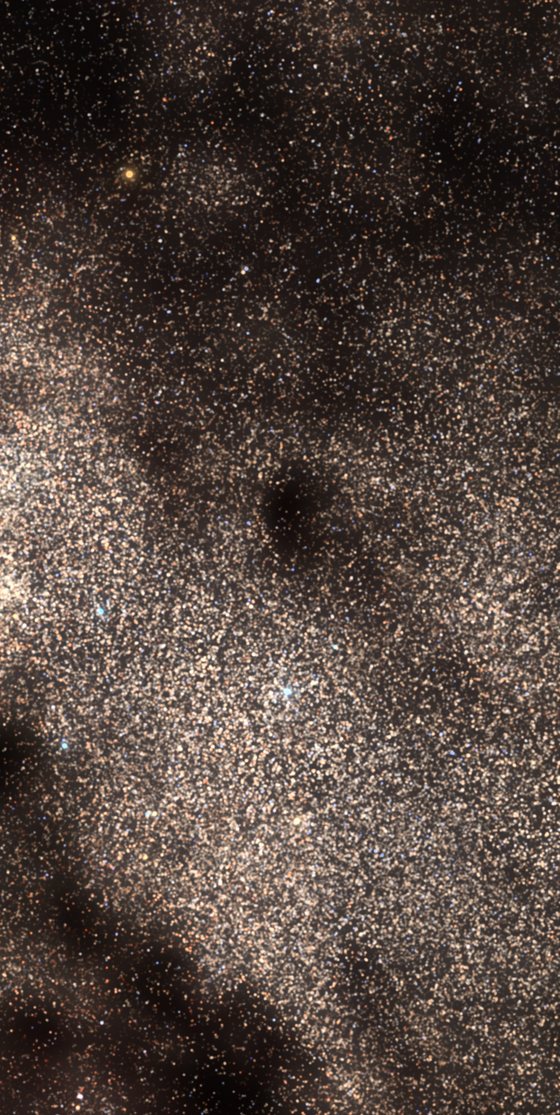
Two billion stars from ESA's Gaia survey, each in its true position. Pinch to zoom from your backyard to the galactic core, through a Milky Way drawn from every star Gaia measured.
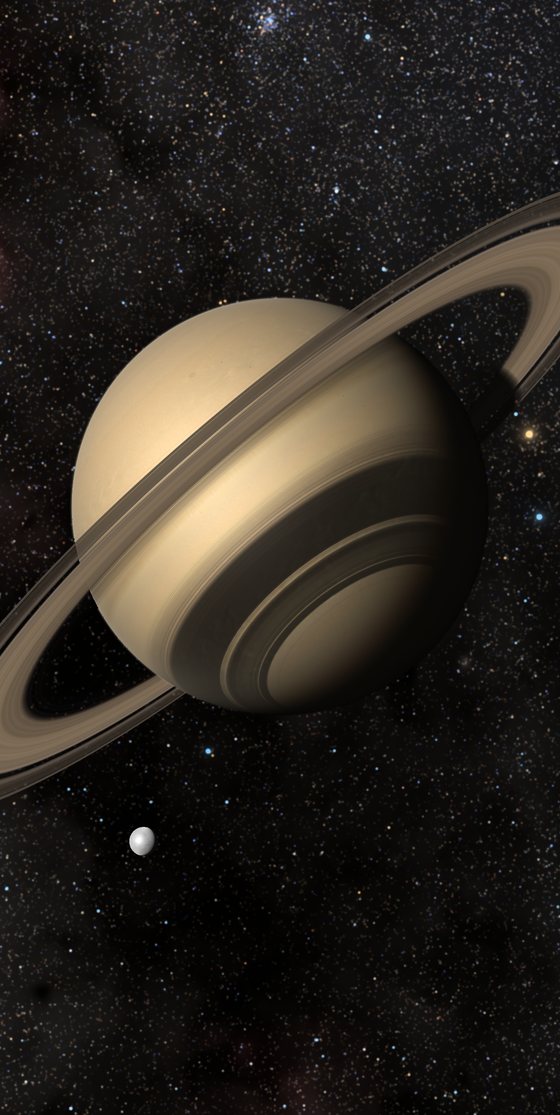
Tap a planet and fly to it. Planets and major moons in NASA probe imagery, in visible light, ultraviolet, infrared, and radar. Rotate them to any angle and watch the seasons and shadows change.
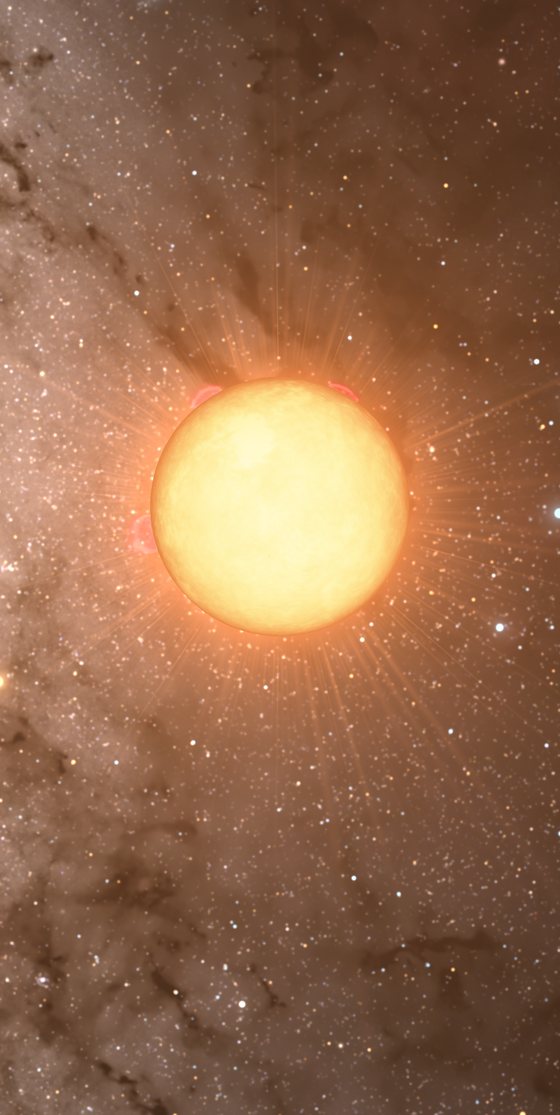
Fly light-years to any star in the sky and see it as it is: its colour, its size, and the story of its life, from birth to whatever end awaits it.
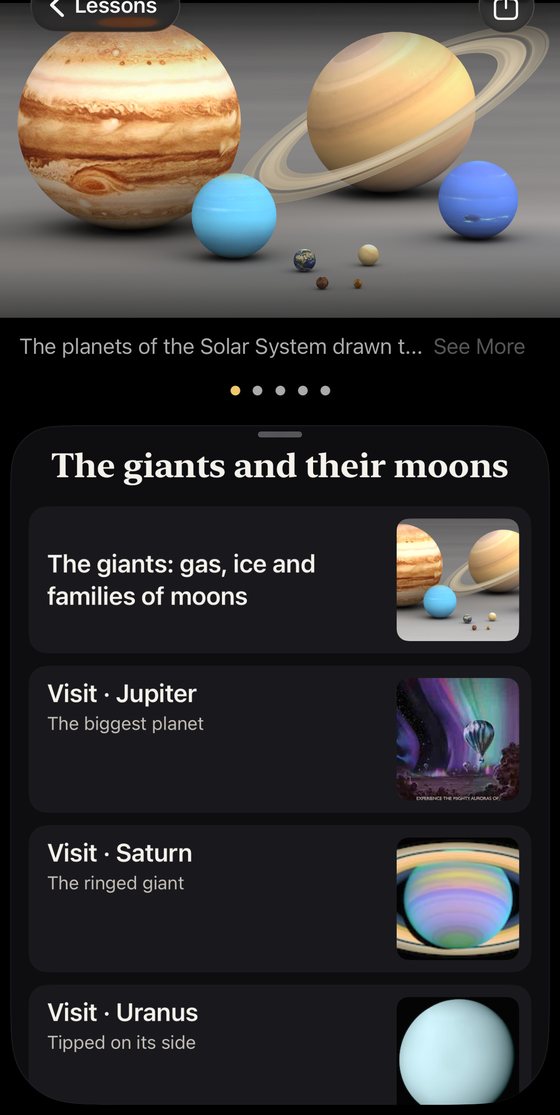
Sixteen short lessons, from the sky over your head to the edge of the universe. Every stop is a live visit: the lesson flies you to the star, steps the clock, or opens the tool it is talking about. The first three lessons are free.
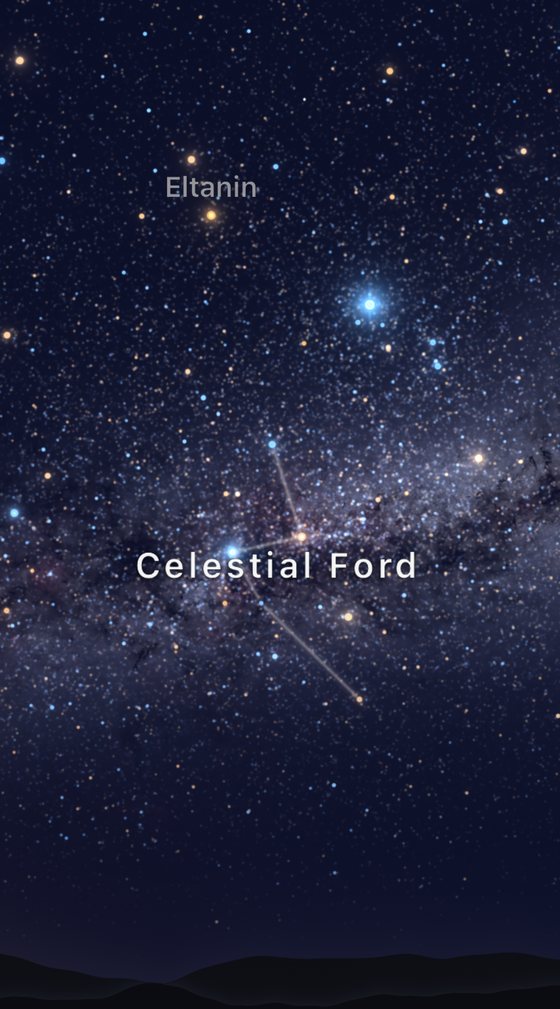
See the stars the way Japan, China, Korea, Vietnam, India, and the Arabian desert saw them: their star figures and folk names drawn on your sky, their stories on each star's page, and their lunar festivals on the calendar.
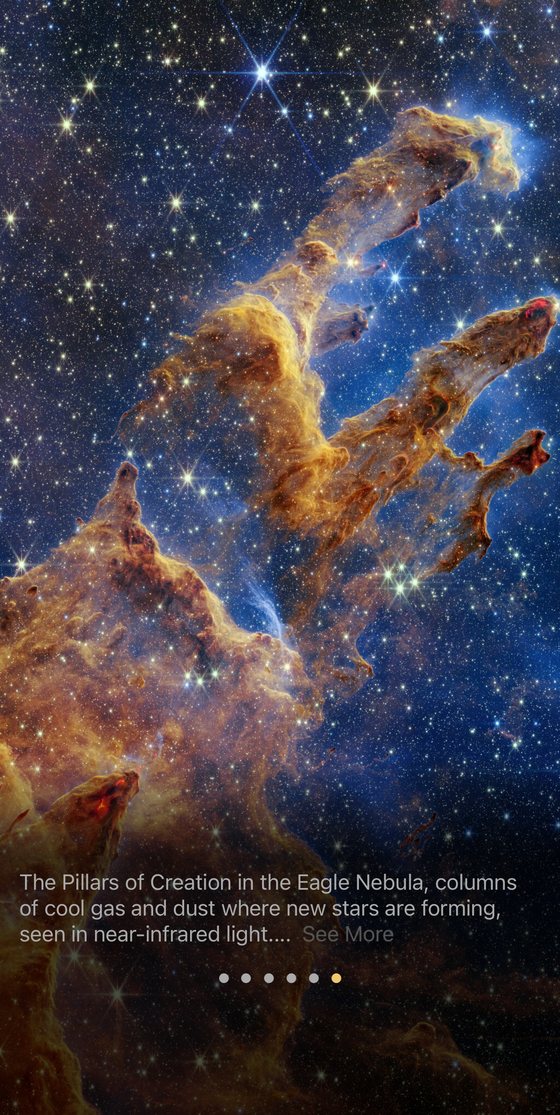
Hubble and James Webb Space Telescope pictures, on the pages of the objects they show, with a Telescope Catalog of 13,000 NGC, IC, and Messier objects placed on your sky.
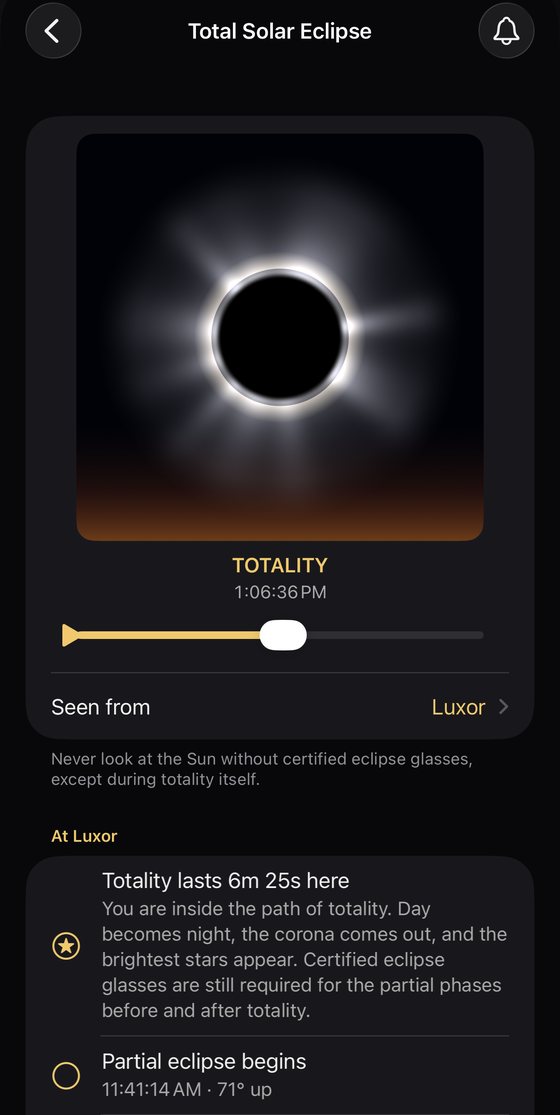
Simulate any solar or lunar eclipse from your exact location: local timings, a disc animation of the Moon crossing the Sun, and a live countdown.
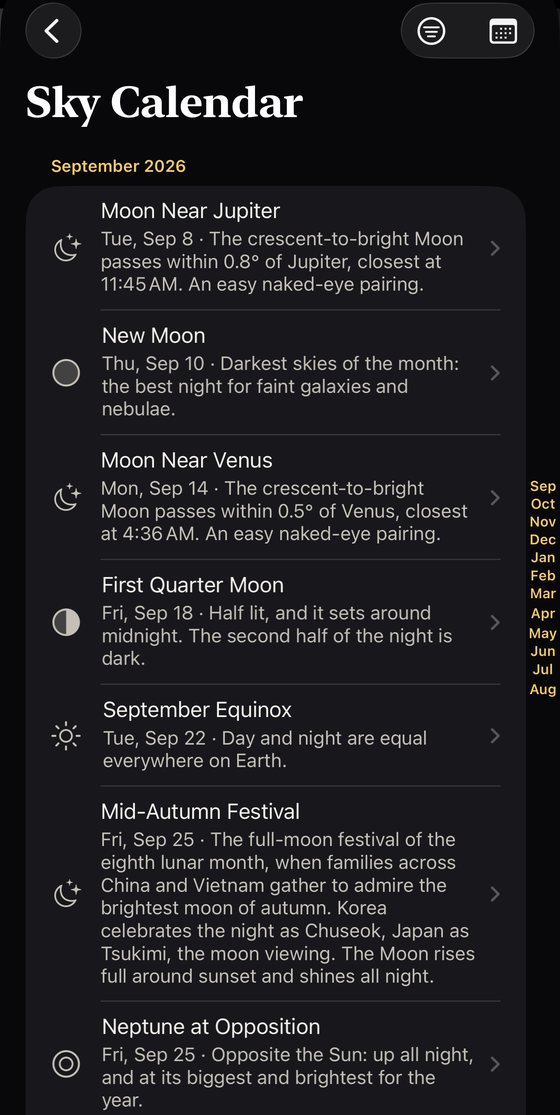
Sky Calendar: every eclipse, meteor shower, conjunction, and full moon. Night Planner and Sky Forecast for tonight, hour by hour. Reminders that fire only when something is worth stepping outside for, including ISS passes with a live countdown.
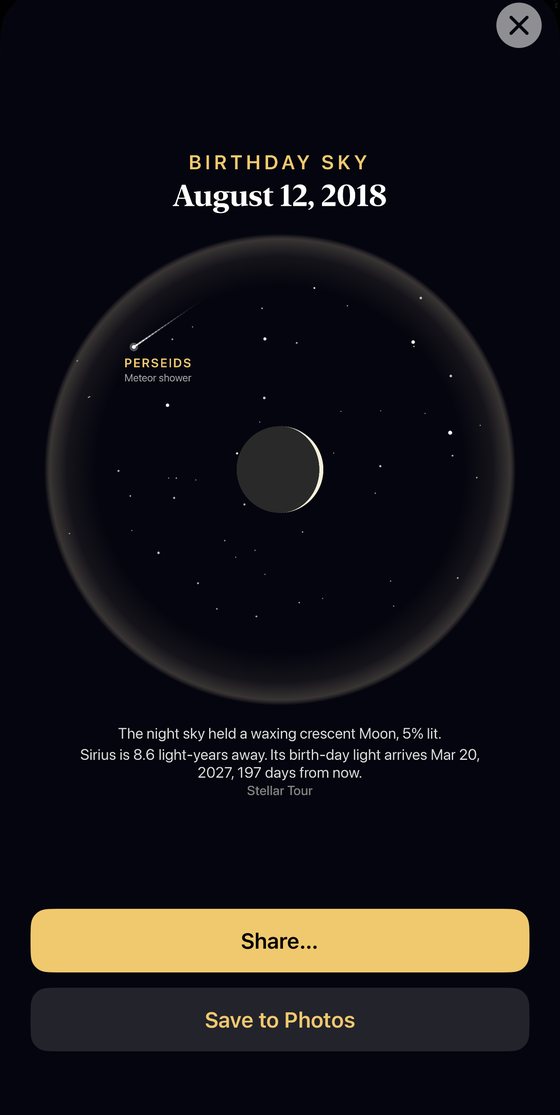
Birthday Sky: a shareable card of the sky on the night you were born. Kid Mode rewrites the whole tour for explorers aged five to seven.
From a first look at the Moon to the edge of the observable universe. Teaching with it? There is a page for teachers.
Dr. Aaron Day wrote every word. Instead of a flood of random facts, Stellar Tour tells the scientifically accurate story of each world: what it is like on the ground, in the seas, or floating through the clouds.
English, Spanish, French, German, Italian, Portuguese, Russian, Japanese, Korean, Simplified and Traditional Chinese, Arabic, Hindi, Vietnamese, and Icelandic, with every page, picture, and diagram translated. Dates in your own calendar.
A pure red display keeps your eyes dark-adapted. Ask Siri what is visible tonight. Home Screen and Lock Screen widgets carry rise and set times and the next sky event. VoiceOver and Dynamic Type throughout.
Cosmic Expansion adds the planner, the catalog, the eclipses, the exoplanets, the galaxies, the black holes up close, the full year of the calendar, and the whole course in a single purchase that is yours forever.
Free on the App Store for iPhone and iPad. The expansion is a single purchase, not a subscription.